Welcome to coveredcallETFs.com. CoveredcallETFs.com is built to be a gateway that offers an introduction to Covered Call ETFs, how they work and which benefits they offer. ETFs are a relatively new type of investment that gives you the chance to use investment strategies previously only available to big hedge funds and investment banks due to the high cost associated with replicating these strategies. ETFs are now available to regular investors in the United States and Canada as well as a number of other countries. This offers small retail and institutional investors the chance to earn a good return on invested capital in slow-moving or falling markets.
Here are some of the questions we answer on this website:
Whether you should sell your ETFs or borrow money for the down payment of a house. Where to check the interest rates in local markets such as the UK and Sweden.
If Covered call ETF:s are a good investment in your country. Local laws and tax regulations can have a huge impact on which investments you should make. An investment that is good if you live in Sweden or the UK can be horrible if you live in the US.
What is an ETF (Exchange-Traded Fund)?
If you’re new to investing, you’ve probably heard the term ETF thrown around a lot. ETFs are one of those financial tools that sound way more complicated than they really are. So let’s break it down in plain English.
The acronym ETF stands for Exchange-Traded Fund. It is very similar to a mutual fund, but the fund shares are listed on an exchange and traded in a manner very similar to stock trading. While shares of a standard mutual fund are normally only bought and sold once a day, the shares of an ETF are bought and sold continuously throughout the trading day. That means you can buy or sell shares in an ETF throughout the day using a regular brokerage account.
A mutual fund or exchange-traded fund is essentially a bundle of investments. Instead of you picking individual assets (eg. stocks) you buy shares in a fund. The fund takes the money from all the share owners and use it to invest. A big advantage with using funds is that you get instant diversification. Example: Let’s say you want to invest in tech companies. You could buy shares of Apple, Amazon, Microsoft, Google, and so on—one company for each purchase. But that’s time-consuming and pricey. Instead, you can buy shares in a tech-focused mutual fund or ETF, which already owns shares in all those companies.
This gives you diversification, which is a fancy way of saying you’re not putting all your eggs in one basket. If one company stumbles, the others can help balance it out. It’s less risky than betting everything on one stock. For a new investor with a small budget, achieving a proper degree of diversification buy investing in individual assets can be difficult. With mutual funds and ETFs, you can invest a small amount of money and get instant diversification.
Key Features of ETFs
Diversification: ETFs often track an index, such as the S&P 500 or NASDAQ-100, meaning when you buy shares of an ETF, you’re investing in a wide range of companies or assets. This diversification helps spread risk, as you’re not relying on the performance of a single stock or bond.
Trading Like a Stock: ETFs are bought and sold on stock exchanges throughout the trading day, just like individual stocks. This means their price fluctuates based on market supply and demand, unlike mutual funds, which are priced once daily after markets close.
Low Fees: ETFs tend to have lower expense ratios compared to mutual funds. Since many ETFs are passively managed (they simply track an index rather than relying on a fund manager to pick stocks), their operating costs are usually lower. Actively managed ETFs, however, tend to have higher fees.
Liquidity: Because ETFs are traded on exchanges, they are generally considered to be liquid, meaning you can buy or sell them easily during market hours. However, liquidity can vary depending on the ETF’s volume and the assets it holds.
Transparency: Most ETFs disclose their holdings on a daily basis, giving investors clear insight into where their money is invested. This transparency is one of the features that sets ETFs apart from mutual funds, which may only disclose holdings quarterly.
ETFs Are Available For Many Different Niches
Whatever you’re into—or whatever financial strategy you want to follow—you can probably find an ETF that will at least be close to what you want.
Here are a few examples:
ETFs that are designed to follow a stock index, e.g. the &P 500.
ETFs that invest in companies in specific industries, e.g. tech, healthcare, or energy.
ETFs that invest in bonds, or a combination of stocks and bonds.
ETFs that invest in real estate.
ETFs that are designed to follow a commodity price, or a basket of commodities.
ETFs that invest in specific geographical markets, e.g. South East Asia.
ETFs that invest in something very specific, e.g. renewable energy, gaming companies, or AI companies.
ETFs vs. Mutual Funds: What’s the Difference?
Both ETFs and mutual funds are collections of investments, but they work differently. ETFs trade like stocks, meaning you can buy and sell them any time during market hours. Mutual funds, on the other hand, only trade once per day, after the market closes.
ETFs usually have lower fees and more flexibility. That’s why they’re especially popular among beginner investors and people using DIY platforms like Robinhood, Fidelity, or Vanguard.
Why People Like ETFs
Low cost: Most ETFs have lower fees than mutual funds.
Easy access: You can invest in an entire market or sector in one move.(This is also possible with mutual funds.)
Transparency: You can usually see exactly what the ETF holds.
Flexibility: Buy or sell anytime during the trading day, just like a stock.
Good for beginners: You don’t need to be a stock-picking genius to get started.(This is also true for mutual funds.)
Diversification: Even if you only have a small amount of money to invest, you can achieve a high degree of diversification. (This is also true for mutual funds.)
How ETFs Work: Simple Mechanics Behind the Scenes
ETFs might look like mutual funds on the surface—they both let you invest in a collection of assets—but ETFs come with one major difference: they trade on stock exchanges in real time. That means you can buy and sell them just like regular stocks, whenever the market is open.
Here’s what that actually means in practice:
Real-Time Price Changes
With mutual funds, the price (called the NAV, or Net Asset Value) is set once per day after the market closes. So if you place an order at noon, you won’t know the exact price until later that evening. ETFs don’t work like that. Their prices move throughout the trading day—just like Apple, Tesla, or any other stock. If demand goes up, the price goes up. If there’s a sell-off, the price drops. You can watch the ticker change by the minute, which is great for people who like to keep an eye on market timing.
They Trade Like Stocks—With All the Tools That Come With It
ETFs are super accessible. You can buy them on just about any trading platform—Robinhood, Fidelity, E*TRADE, Charles Schwab, Vanguard, and more. If you have a brokerage account, you’re good to go. When you place an order, it goes through like any other stock. You can buy one fund share, ten, or even fractional fund shares depending on the platform.
Since ETFs behave like stocks, you can do a lot more than just buy and hold:
Set a limit order to buy only at a certain price
Use stop-loss orders to sell if the price dips below a set level
Short an ETF (if you think it’ll drop in value)
Hold long-term as a stable part of your investment strategy
Some investors trade ETFs daily. On the other end of the spectrum, we find the investors who buy ETF shares and hold on to them for years. How you use and ETF depends on your goals—but the flexibility is there.
In short, ETFs give you mutual fund-level diversity with stock-level control. You get access to a basket of investments, but with way more freedom in how you buy and sell the fund shares.
What is a covered call ETF?
An ETF is a type of fund that owns a specific type of assets. SPY is the worlds largest ETF. The fund buys the 500 stocks listed on the S&P500 index. The funds results mirror that of S&P500.
A covered call ETF works in a similar way but put out Call options to increase the yield the fund gets each year. This increase the yield the fund gets when the market is going down or stands still but limits the upside in a bull market.
Lets look at a possible example: An ETF fund buys 100 shares of Microsoft stock. These shares provide a dividend yield of 3.2%. A Covered Call ETF would increase this yield by putting out a sell option on these 100 shares. They then sell this call option for 1% of the share value. (The exact price they get for their call options can vary). This allows them to increase the yield from 3.2% to 4.2% completely risk-free.
The only downside is if the stock quickly increases in value during the maturity of the option. In this situation, the ETF will be forced to sell their shares for a price below market value when the option is exercised. This limits the upside. The ETF will still make money but not as much as it would have made if they hadn’t put out the call option.
This makes the Covered Call ETFs an investment that is suitable for most market conditions except for bull markets where a covered call ETF might produce a lower return than regular ETFs and other funds.
Covered call ETFs will in other words offer:
Limited upside
Higher income.
Types of ETFs
ETFs come in many different shapes and sizes. Some are broad and low-risk, others are niche and bold—but they all give you access to groups of investments in a single trade. Whether you’re building a long-term portfolio or trying to bet on a trend, there’s probably an ETF for it.
Here’s a look at some of the most popular types of ETFs and what they’re built for.
Index ETFs
These are the classic, most common ETFs out there. They track market indices like the S&P 500, FTSE100, or Dow Jones (DJIA). The goal here isn’t to beat the market—it’s to track the market. If you want simple, steady exposure to a wide range of top-performing companies, index ETFs can be a great choice. This is where a lot of beginners start.
Example: SPDR S&P 500 ETF Trust is one of the most popular ETFs and it tracks the S&P 500. When you buy it, you’re essentially betting on the performance of 500 of the biggest companies in the U.S.
Sector ETFs
If you believe a specific industry is about to take off—or want to balance your portfolio with exposure to certain sectors—these are the way to go. Sector ETFs let you invest in focused areas like tech, healthcare, finance, or energy without needing to pick individual companies.
Example: XLK targets tech stocks like Apple, Microsoft, and Nvidia. XLF covers financial giants like JPMorgan and Bank of America.
Bond ETFs
These ETFs make it easy to invest in fixed-income assets like government bonds or corporate bonds. Normally, buying individual bonds takes a lot of research (and sometimes high minimums). Bond ETFs simplify all of that by pooling a range of bonds into one place.
Some of the largest and most well-known bond ETFs track the Bloomberg U.S. Aggregate Bond Index, and index commonly known simply as “the Agg”. The Agg is comprised of over 10,000 United States-issued fixed-income securities, e.g. Treasury bonds, mortgage-backed securities (MBS), and investment-grade corporate debt. ETFs tracking the Agg are often used to add stability and income to a portfolio, especially during market volatility.
Examples: Two of the largest ETFs tracking the Agg are the iShares Core U.S. Aggregate Bond ETF (ticker: AGG) or the Vanguard Total Bond Market ETF (BND). At the time of writing, each of them hold around $125 billion in assets. They have comparatively low costs and are popular choices among investors looking for long-term stability and low fees.
Of course, bond-tracking ETFs does not have to be as “boring” as the Agg-tracking ones, and you can pick ETFs with a different approach if you want to spice things up and are willing to take on more risk. There are for instance ETFs that will invest in bonds issued by governments and/or corporations in emerging markets. Such bonds come with higher risks (including currency risk and political risk) and the interest rates will reflect this. Note: Many emerging-market bond ETFs mitigate the currency risk somewhat by hedging for currency fluctuations.
Other Debt ETFs
There are many ETFs that hold investment-grade bonds, but you can also go for ETFs that invest in other types of debt. There are for instance ETFs that invest in floating-rate loans issued to companies with below-investment-grade credit ratings. Typically, this will involve senior loans, which are secured by the borrower’s assets and rank higher than most other credits if there is an insolvency.
A fairly new invention are the ETFs that offer exposure to private credit through publicly traded vehicles such as business development companies (BDCs) and collateralized loan obligations (CLOs). They can be very high yield, but are of course also high risk. Previously, investing in this type of debt was out of reach for the average retail investor, but through an ETF you do not need to be an institution or high-net-worth individual to get exposure.
Thematic or Niche ETFs
These are for investors who want to lean into specific trends or ideas—whether it’s emerging technology, renewable energy, cannabis, or space exploration. Thematic ETFs are often built around concepts or industries that are comparatively small today but are expected to grow at lot. They’re more volatile, but they also come with the potential for big returns if the trend plays out.
Example: BOTZ focuses on robotics and AI companies. TAN is built around solar energy firms.
If you want to learn more, a good place to start is The Global Industry Classification Standard (GICS, which sorts companies into 11 different core sectors, and then further breaks those down into 24 industry groups, 69 industries, and 158 sub-industries. If you want to be specific when you invest in thematic ETFs, having a good understanding of the GICS can be a useful tool in your toolbox.
A type of ETF that has grown very popular in the last few years is the one that invest in the semiconductor industry, and the GICS has been helpful in clarifying for investors why they should take a closer look at this niche. Within the core sector Tech, the GICS identifies three primary industry groups: Software and Services, Technology Hardware and Equipment, and Semiconductors and Semiconductor Equipment. Semiconductors and Semiconductor Equipment is important and distinct enough to warrant a separate group, instead of being clumped together with other hardware. As you probably know already, semiconductors are utilized to control electrical signals in a wide range of devices, and lot of our everyday technology rely on them – including computers. In 2014-2024, the S&P Semiconductors Select Industry Index delivered an annualized return above 17%, which meant that it outpaced both the S&P Tech Hardware Index and the S&P Software & Services Index.
Examples of semiconductor ETFs:
Invesco PHLX Semiconductor ETF (SOXQ) Expense ratio 0.19%
SOXQ tracks the PHLX Semiconductor Sector Index, a benchmark that has been around since 1993. With an expense ratio of just 0.19%, SOXQ has become popular among long-term investors who wish to keep the costs down. The historical performance of SOXQ has been similar to that of VanEck Semiconductor ETF (SMH) and iShares Semiconductor ETF (SOXX), and there are big portfolio overlaps between these three ETFs.
VanEck Semiconductor ETF (SMH) Expense ratio 0.35%
VanEck Fabless Semiconductor ETF (SMHX) Expense ratio 0.35%
iShares Semiconductor ETF (SOXX) Expense ratio 0.35% SOXX tracks the NYSE Semiconductor Index. An options chain is available for investors who wish to buy or sell calls and puts. Note: There is a lot of exposure overlap between SOXX and SMH, but SOXX underweights NVDA and TSM.
SPDR S&P Semiconductor ETF (XSD) Expense ratio 0.35% XSD can be a good choice if you want exposure to up-and-coming companies instead of focusing on well-established giants. The XSD tracks the S&P Semiconductor Select Industry Index, and since this index is equal weighted, a smaller semiconductor firm that just made it into the index will have the same weighting as a giant whenever he index re-balances.
First Trust Nasdaq Semiconductor ETF (FTXL) Expense ratio 0.60%
Direxion Daily Semiconductor Bull 3x Shares (SOXL) Expense ratio 0.75% SOXL is a popular choice among day traders and swing traders, who are less concerned with the 0.75% expense ratio than buy-and-hold investors. SOXL does not prioritize low cost and high diversification – it is an ETF that brings the volatility sought after by short-term traders, and this has translated into high liquidity which is also what short-term traders need. SOXL is a so-called leveraged ETF, which uses derivatives to outperform an index. The goal for SOXL is to deliver a daily return of three times that of the NYSE Semiconductor Index, and the managers of SOXL are using index swaps to achieve this
International ETFs
Since a lot of the mainstream ETFs are heavily focused on the U.S. market, international ETFs have evolved to cater to investors who want exposure to other countries and regions around the globe.
International ETFs can give you exposure to different countries or regions without you needing to research individual foreign companies. Some are region-based (like Europe or Asia), while others are targeting specific emerging markets.
In this context, international simply tends to mean “not focused on the U.S.”, since the U.S. market is so dominant in the world of ETFs.
Example: EEM invests in emerging markets like China, Brazil, and India. VEU holds a mix of global stocks but leaves out U.S. companies.
Dividend ETFs
These ETFs focus on companies that regularly pay out dividends. They’re a solid choice for investors who want to generate consistent income—whether that’s to reinvest or help fund retirement. If stocks owned by the ETF pay dividends, the money is passed along to the investors. Most EFTs pay out the money quarterly on a pro-rata basis (how much you get depends on how many fund shares you own).
Example: VIG includes companies with a track record of growing their dividends over time. SCHD focuses on high-yield dividend stocks with strong fundamentals.
Benefits of ETFs: Why So Many Investors Choose Them
Pros and Cons of ETFs
Benefits of ETFs
Low Costs: Most ETFs, especially those that are passively managed, have lower fees than actively managed mutual funds.
Flexibility: ETFs can be traded throughout the day, allowing investors to react quickly to market conditions.
Tax Efficiency: ETFs are generally more tax-efficient than mutual funds because they don’t distribute capital gains to investors as frequently.
Accessibility: ETFs can be bought and sold through regular brokerage accounts, and you can invest in them with relatively small amounts of money, which makes them accessible to a wide range of investors.
ETFs have exploded in popularity over the last couple of decades—and it’s not just hype. They offer a smart, flexible, and cost-effective way to invest, whether you’re a beginner building your first portfolio or a seasoned investor looking to streamline things. So what exactly makes ETFs such a go-to option?
Here’s a breakdown of the biggest benefits that keep people coming back.
Diversification Without the Hassle
One of the best things about ETFs is that you get access to a broad range of investments with just a single purchase. Instead of buying dozens of individual stocks or bonds, you can buy one ETF that holds them all. This spreads out your risk—if one company in the ETF takes a hit, the others can help balance it out. It’s a simple way to avoid putting all your eggs in one basket, even with a small investment.
Of course, this can also be achieved using normal mutual funds.
Lower Fees That Don’t Eat Your Returns Most (but not all) ETFs are passively managed, which means they track an index rather than relying on a team of managers to pick stocks. That translates into lower costs for you. Mutual funds often come with higher expense ratios and sometimes even front-loaded fees. ETFs usually keep those expenses to a minimum, letting more of your money stay invested and working for you. With that said, index-tracking passively managed mutual funds with low fees are also available; the ETF is not the only way to go if you want to keep fund management fees down.
Buy and Sell Anytime (Just Like a Stock)
Unlike mutual funds which only trade once a day after the market closes, ETFs can be bought or sold any time the market is open. Want to make a move at 10 a.m.? No problem. Need to sell before closing? Go ahead. This kind of flexibility is a huge plus for people who like having more control over their timing.
Daily Transparency
Most ETFs disclose exactly what they hold every single day. That means you’re never left guessing where your money is actually going. Mutual funds, on the other hand, typically report holdings quarterly, which makes ETFs the more transparent option by far.
More Tax-Friendly Than Mutual Funds in the United States Thanks to something called the “in-kind redemption process” (don’t worry, you don’t need to memorize that), ETFs are usually more tax-efficient than mutual funds in the United States. In simple terms, when investors sell out of an ETF, it doesn’t trigger capital gains taxes for everyone else. That’s not always the case with mutual funds, which can hit you with unexpected tax bills—even if you didn’t sell anything.
ETFs vs. Mutual Funds vs. Stocks: What’s the Difference?
When you’re figuring out where to put your money, it can be tough to choose between ETFs, mutual funds, and individual stocks. Each one works a little differently, and they all come with their own pros and cons. Here’s a quick side-by-side breakdown to help make sense of it all—so you can pick what fits your investing style best.
Diversification
If you’re looking to spread out risk, both ETFs and mutual funds are solid picks. They pool your money across dozens or even hundreds of companies or assets, which lowers your exposure to any single one falling apart. Individual stocks, on the other hand, leave you riding the wave of one company’s performance—great if it pops, not so great if it tanks.
Of course, you can achieve diversification in your own stock portfolio by being mindful when you pick the stocks. Many beginners, however, start out with a small amount of money, and simply investing in 50+ different companies at the same time is not really feasible, unless you buy fractional shares. For a novice investor with $100 a month to invest, putting the money into a well diversified mutual fund or ETF is an easy way to ensure a high degree of diversification from day 1.
Note: Even though mutual funds and ETFs can be highly diversified, it is actually a good idea to employ some diversification when it comes to funds as well. As your portfolio grows, consider investing in several different funds instead of putting all your money into the same one.
Fees
ETFs win here. If you want to keep the fund fees down, passively managed ETFs are usually a great choice, as their fees tend to be much lower than what you would by mutual funds.
Mutual funds are more likely to be actively managed, and they also tend to come with sales charges and various maintenance costs baked in, which can pile on the costs. With that said, some of the passively managed index-tracking mutual funds have really low fees.
Individual stocks don’t come with ongoing fees.
Trading
ETFs and individual stocks are both traded throughout the day on stock exchanges. You can buy and sell them whenever the market’s open. Mutual funds? Not so much. You can only trade them once per day, after the market closes, and you won’t know the price until then.
Minimum Investment
ETFs and stocks are very beginner-friendly when it comes to getting started. Many platforms let you buy fractional shares, so you can invest with as little as $5 or $10. Mutual funds often require a higher minimum investment—sometimes $500, $1,000, or even more—depending on the fund.
Some stocks are not possible to purchase on a small budget unless you purchase a fractional share. The most famous example is BRK.A (Berkshire Hathaway Inc.), which – at the time of writing – has a share price of 750,000 USD. NVR is trading just below 7,560 USD, BKNG at 4,435 USD, and AZO just above 3,700 USD.
Which One Should You Pick?
Go with ETFs if you want easy diversification, low fees, and the ability to trade throughout the day.
Choose mutual funds if you’re more hands-off. Many people who invest in mutual funds want actively managed funds and are willing to pay the cost.
Try individual stocks if you enjoy researching companies, taking bigger risks, and potentially earning higher rewards—but with more volatility.
You can also mix and match. Many investors use a core of ETFs for stability, add mutual funds for certain managed strategies, and sprinkle in a few individual stocks for fun or growth potential. There’s no one-size-fits-all—just what fits you.
Feature
ETF
Mutual Fund
Individual Stocks
Diversification
High
High
Low (unless you own many)
Management Fees
Low
Medium to High
None
Traded Like a Stock
Yes
No
Yes
Minimum Investment
Very Low
Often High
Varies
Risks of Investing in ETFs: What to Watch Out For
Drawbacks of ETFs
Trading Fees: While ETFs generally have lower expense ratios, you may still have to pay a commission each time you buy or sell ETF shares, depending on your broker. Some brokers offer commission-free ETFs.
Market Risk: Like any investment tied to stocks or bonds, ETFs are subject to market volatility. If the index or sector the ETF tracks performs poorly, your investment will lose value.
Tracking Error: In some cases, an ETF may not perfectly match the performance of the index or assets it aims to replicate. This is known as tracking error.
ETFs are often praised for being easy, affordable, and beginner-friendly—but let’s not pretend they’re perfect. Like any investment, ETFs come with risks. Some are obvious, others sneak up on you if you’re not paying attention. Whether you’re new to the market or just building a more hands-on portfolio, it’s important to know what could go wrong before jumping in.
Market Risk: When the Whole Market Sinks, So Does Your ETF
Many ETFs follow a market index or sector. That’s great when things are going up—but if the market takes a dive, your ETF goes with it. Buying an S&P 500 ETF, for example, means you’re tied to the performance of the 500 largest U.S. companies. If the economy slows down, inflation spikes, or investor confidence tanks, expect your ETF’s value to drop too. Diversification helps spread risk, but it doesn’t erase it.
Liquidity Risk: Some ETFs Are Harder to Trade Than Others
Not all ETFs are created equal when it comes to trading volume. The big ones—like SPY or QQQ—trade millions of shares a day. But niche or thematic ETFs that focus on very specific industries or trends may barely move on some days. That’s a problem if you want to buy or sell fast, and it is also a problem for traders who want to use ETFs for day trading and aim to profit from small intraday movements. Thin trading volume can also lead to wider bid-ask spreads, meaning you might pay more or sell for less than you expected.
True Diversification vs. Apparent Diversification
It’s easy to assume that owning multiple ETFs gives you more protection. And while that’s true to a point, it can backfire. A lot of ETFs hold the same popular stocks—Apple, Microsoft, Amazon, Google—so buying five different ETFs might just mean you’re stacking up on the same names over and over. You think you’re diversified, but you’re still heavily exposed to the same companies. In order to achieve a higher degree of diversification, you need to be mindful when you decide which ETFs to invest in.
Hidden Costs: Beyond the Expense Ratio
ETFs are known for low fees, but there are other costs people forget. The bid-ask spread—the difference between what buyers are willing to pay and what sellers want—can eat into returns, especially with lower-volume ETFs. And then there’s the riskier side of the ETF world: leveraged ETFs. These are designed to multiply daily gains (or losses), and while they might look exciting, they’re volatile, expensive, and not meant for long-term holding.
How to Choose the Right ETF: A Practical Checklist
ETFs can make investing simple—but picking the right one? That takes a little thought. With thousands of ETFs out there, it’s easy to get overwhelmed or distracted by flashy names and trending themes. The good news? You don’t need to be a finance pro to make a smart pick. You just need to ask the right questions.
Here’s a straightforward checklist to help you cut through the noise and choose an ETF that actually fits your goals.
What Does the ETF Track?
Every ETF is built around something—an index, sector, trend, or group of assets. Start by looking at what the ETF is following. Is it a broad market index like the S&P 500? A specific industry like tech or healthcare? Or something more niche, like artificial intelligence or renewable energy?
If you’re aiming for long-term growth, broad market ETFs might be your go-to. If you want to play a specific trend, thematic ETFs could be worth a look. Just make sure the theme matches your market analysis and your risk tolerance.
How Much Does It Cost to Own?
Expense ratios are the ongoing fees you pay to keep the ETF in your portfolio. Lower is better, since each penny you pay in fees is a penny you can not invest and that will not give any returns for you. Always check the ratio before you buy. If it’s high, there better be a really good reason. Make sure the higher fee is really worth it in terms of growth compared to similar ETFs with lower fees.
Most of the well-known ETFs from major issuers have expense ratios under 0.20%. Some go as low as 0.03%. That difference may not sound like a big deal, but over time, higher fees eat into your returns—especially if you’re investing for the long haul. An ETF having an unusually high fee that is not made up for in returns can also make the fund shares less attractive on the share market.
Who’s Behind the ETF?
It is generally considered safer to stock with well-known issuers with a good track record. Big names like Vanguard, iShares (by BlackRock), and SPDR (by State Street) are known for reliability and solid fund management. If you’re looking at an ETF from a company you’ve never heard of, dig deeper before you make any decision. What’s their track record? Are they well-regarded in the investing world?
Trust matters when your money’s on the line.
Note: Since ETFs are listed on an exchange, you will get some additional safety. A reputable exchange will require a lot of paper work before any fund is permitted to be listed, and there are also ongoing requirements that must be fulfilled for the fund to stay listed.
What’s the Performance History?
Past performance isn’t everything—but it is something. Look at how the ETF has performed over the last 1, 3, and 5 years. Compare it to similar ETFs or its underlying index. Is it doing what it’s supposed to do? Does it move how you’d expect based on market conditions?
Don’t chase past returns, but do pay attention to consistency. Past returns do not guarantee future performances, but they can be an indication.
Does It Match Your Strategy?
Finally, ask yourself what you actually want from this investment. Are you looking for growth over the next 10–20 years? Steady income through dividends? Short-term exposure to a specific sector? Something to hedge against risk? Make sure the ETF lines up with your time horizon, risk tolerance, and overall plan. If you’re building a core portfolio, a volatile niche ETF probably isn’t the best fit. If you’re trying to add some spice to an otherwise boring setup, then maybe it is.
Tips for ETF Investors: How to Build Smarter, Stronger Portfolios
ETFs make it easy to start investing—but if you want to go from “just getting started” to building real wealth, it pays to be strategic. A few smart moves (and a few things to avoid) can help you get more out of every dollar you invest.
Here are some no-nonsense tips for making ETFs work harder for you.
Start With Broad ETFs First If you’re new to investing, don’t overthink it—begin with a broad-market ETF like VTI (which tracks the total U.S. stock market) or VOO (which tracks the S&P 500). These give you instant exposure to hundreds of companies across different sectors, all in one purchase. They’re low-cost, time-tested, and take the guesswork out of “what stock should I buy?”
Once you’ve built a solid foundation, then you can explore sector-specific or thematic ETFs if you want to add some variety.
Reinvest Dividends Automatically
If your ETF pays dividends, don’t just let the cash sit in your account. Turn on DRIP (Dividend Reinvestment Plan) through your broker if available. This automatically reinvests dividends back into more shares of the ETF, helping you build wealth through compounding over time.
Even small dividend payouts add up when you reinvest consistently—especially if you’re holding long-term.
Don’t Chase Hype
It’s tempting to jump into the latest hot ETF—AI, space, blockchain, you name it. But unless you’ve done the homework and believe in the long-term trend, be cautious. A lot of these niche funds are built to attract attention, not necessarily deliver returns.
Avoid investing just because something is trending online or had a big one-month return. FOMO is not a strategy.
Watch Out for Portfolio Overlap
It’s easy to think you’re diversified because you own several different ETFs—but many of them may hold the exact same companies. For example, if you own a tech ETF, an S&P 500 ETF, and a growth ETF, you probably have a lot of exposure to Apple, Microsoft, Amazon, and Google. Check the top holdings of your ETFs, and make sure you’re not unintentionally doubling or tripling your bets on the same names when you´re seeking a higher degree of diversification.
How to Invest in ETFs
Open a Brokerage Account: ETFs are bought and sold like stocks, so you’ll need a brokerage account. Many online brokers offer ETFs, and some even provide commission-free ETFs.
Choose Your ETF: Determine what you’re looking to invest in—whether it’s a broad market index, a specific sector, or a global economy. Consider the ETF’s expense ratio, liquidity, and performance relative to its benchmark.
Monitor and Rebalance: Once you’ve invested in an ETF, it’s important to periodically review its performance. You may need to rebalance your portfolio if your allocations shift over time.
The Impact of Market Sessions on ETF Trading Behaviour
Exchange-Traded Funds (ETFs) have emerged as a staple in the investment landscape, capturing significant interest from investors due to their appealing attributes such as flexibility, liquidity, and diversification. However, a factor that profoundly influences the trading of ETFs is the timing related to global market sessions. By comprehending these fluctuations and their underlying mechanisms, investors can gain crucial insights that aid in formulating effective trading strategies.
Understanding Market Sessions
A fundamental aspect of trading in global financial markets is the understanding of market sessions. These sessions are demarcated based on geographical locations and are categorized broadly into three main sessions: the Asian, European, and American sessions. Each session carries distinct characteristics and exerts varying impacts on trading volumes and market volatility.
The Asian Session
The Asian market session is largely driven by key economic powerhouses such as Japan, China, and Australia. This session commences the 24-hour trading day and frequently sets the precedent for how subsequent markets might behave. During this period, ETFs that have substantial exposure to Asian equities might experience heightened activity and volatility. This fluctuation can largely be attributed to the region’s responses to overnight news and the release of economic data. Investors focusing on the Asian session need to be especially astute, keeping a close watch on developments that may instigate rapid market movements.
The European Session
Following the closure of the Asian markets, the European session takes center stage. This period serves as an integral bridge between the Asian and American sessions, leading to elevated volatility. European markets digest ongoing news from both Asian and North American regions, and this session may witness significant movements in ETFs that target European indices or sectors. The release of critical information by European corporations also plays a significant role during this timeframe, impacting trading volumes and market dynamics.
The American Session
The American session stands out due to its substantial trading volumes and superior liquidity, predominantly influenced by the prominence of the U.S. markets. As the final major session in the global trading day, it offers traders the opportunity to react to developments from earlier sessions in Asia and Europe. This session is particularly pivotal for investors interested in U.S. equities, commodities, and bonds, as ETFs tied to these assets may exhibit more significant price movements. For traders, understanding the nuances of the American session can inform more strategic trading choices.
Influence of Session Overlaps
Some of the most active trading periods occur during market session overlaps. Notably, there is a frequent overlap between the European and American sessions, often regarded as a peak trading period. This overlap presents considerable liquidity, sparking notable price movements. For both short-term traders and long-term investors, these overlaps offer beneficial windows of opportunity for entering or exiting market positions.
Market Participants and Their Impact
Distinct market sessions attract various types of participants, each contributing to the unique trading characteristics observed. Often, institutional investors dominate during the European and American sessions due to the higher liquidity. Conversely, the Asian session sees a greater presence of retail investors. This varied participant mix yields a tapestry of trading behavior across sessions, influencing decisions and resultant market dynamics.
Strategies for ETF Traders
For those trading ETFs, carefully timing trades to align with session attributes is key. Recognizing the timeframes when specific ETFs are most actively traded can optimize trade execution and ensure actions are taken at the most favorable prices. Moreover, traders may capitalize on the liquidity windows created by session overlaps, tactically planning entry and exit points.
A crucial component for investors lies in maintaining an informed stance regarding global events and pivotal economic announcements. Such events have the potential to sway market sentiment during particular sessions. To aid in this due diligence, various financial platforms provide real-time updates, facilitating informed decision-making. Platforms like Bloomberg and Reuters are invaluable resources, offering comprehensive insights and analytics tools.
In summary, by cultivating a deeper understanding of market session dynamics and how they influence ETF trading behavior, investors can adeptly navigate the intricacies of global financial markets. This enhanced awareness and strategic orientation can potentially yield improved trading performance, helping investors achieve their financial objectives more effectively.
When trading Exchange-Traded Funds (ETFs), the timing of your transactions plays a, crucial role in achieving optimal results. ETFs have gained popularity due to their liquidity, diversity, and cost-effectiveness. However, the dynamic nature of the financial markets means that well-timed trades can significantly impact your returns. By understanding the nuances of ETF trading, you can enhance your strategy and increase the potential for successful investments.
Key Considerations for Trading ETFs
Before delving into the best times to trade, it is essential to understand a few key considerations that can affect your trading outcomes.
Liquidity: The liquidity of an ETF is a determining factor in trading efficiency. ETFs with higher liquidity tend to have narrower bid-ask spreads, which is advantageous for traders seeking to minimize costs. Checking the average daily volume of an ETF can give you an idea of its liquidity. Higher volume indicates better liquidity, meaning that you are likely to buy and sell the shares with minimal impact on the price.
Volatility: Market volatility can significantly affect the timing and outcome of your trades. More volatile markets can lead to larger price swings, which might create opportunities for experienced traders to capitalize on quick movements. However, for those less seasoned, high volatility can also lead to increased risk, underscoring the importance of using appropriate risk management strategies.
Market Conditions: Various market conditions, influenced by macroeconomic factors, interest rates, and earnings reports, can cause fluctuations in ETF prices. Keeping abreast of such factors can help traders make informed decisions about when to enter or exit positions. Awareness of broader economic conditions plays a vital role in analyzing potential ETF movements.
Optimal Times to Trade ETFs
Identifying the best times of the day to trade ETFs is an essential aspect of refining your trading strategy. Generally, traders focus on two primary periods:
Opening Hours
The first hour after the market opens, from 9:30 AM to 10:30 AM EST, is typically the most volatile. During this period, both retail and institutional investors react to overnight news and events, causing a surge in trading activity. For traders, this time can present both opportunities and risks. The high liquidity and volatility mean that prices can change dramatically within minutes. Successful traders often employ specific strategies that capitalize on this rapid market movement, such as day trading strategies that take advantage of early price momentum.
Late Afternoon Trading
Another favorable period for ETF trading is the last hour before the market closes, from 3:00 PM to 4:00 PM EST. During these hours, trading volume tends to rise again as investors adjust their positions, making it a strategic time for those seeking to avoid intraday fluctuations. The increased volume during this period can be advantageous for traders who prefer to execute trades when the market is more liquid, minimizing the impact of spreads on their transactions.
Avoiding Midday Lulls
Between the morning and late afternoon trading sessions, typically from about 11:30 AM to 2:00 PM EST, market activity and volume often decrease. This midday lull can lead to wider bid-ask spreads, making it less advantageous to trade during these hours. As such, traders may find it beneficial to refrain from executing new trades unless specific events or news dictate otherwise. Instead, this time might be better utilized for analysis, refining strategies, or monitoring the market for potential afternoon trades.
Using Modern Tools and Resources
In addition to personal intuition and strategies, utilizing modern technological resources can provide valuable insights into when to execute ETF trades. Many brokerage platforms offer advanced tools that enhance a trader’s ability to analyze the market. Features such as market scanners, alerts, and real-time data can aid in refining your trading approach.
These tools allow traders to set alerts for specific market conditions or potential trading opportunities, providing a more responsive and data-driven approach to trading. Additionally, platforms offering educational resources and market analyses can help traders stay informed about current market conditions and sharpen their trading skills. Websites like Investopedia and various financial news outlets provide comprehensive information that can enhance a trader’s understanding of market dynamics.
Final Thoughts
Timing ETF trades effectively requires an understanding of how various factors influence the market throughout the trading day. By recognizing patterns of volume and volatility, traders can position themselves more strategically, making informed decisions that align with market conditions. Carefully monitoring your trades and leveraging available tools will enhance your execution, leading to more successful outcomes in the ETF market.
Through a combination of well-researched strategies and the utilization of technological aids, traders can navigate the complexities of ETF trading with greater confidence. As you continue to develop your trading acumen, focus on adapting to market changes and consistently educate yourself on evolving market trends. By doing so, you can optimize your trading approach and enhance your potential for achieving desired investment results.
Expanding on the Concept of Filtering ETF Trade Ideas
Exchange-Traded Funds (ETFs) have become indispensable in the portfolios of many investors due to their unique combination of benefits. These range from tax efficiency to liquidity, offering a mix between the features of mutual funds and individual securities. With the vast array of ETFs available in the market, investors are often faced with the challenge of selecting suitable ones for their portfolios. Filtering ETF trade ideas effectively is crucial for making informed decisions, and this process can become overwhelming without the right tools and strategies in place.
Comprehensive Understanding of ETF Screeners
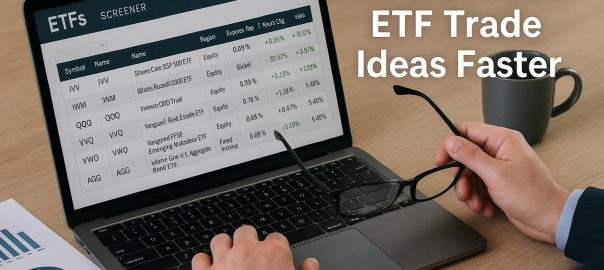
To begin with, ETF screeners serve as pivotal tools for investors. These screeners are designed to filter through thousands of ETFs based on several criteria. Investors can specify filters such as asset class, which denotes the category of investments an ETF falls into, or geographical focus, indicating the regional emphasis of the fund. ETFs can also be sifted through sector filters, allowing investors to focus on particular areas such as technology, healthcare, or finance. One of the critical metrics many use is the expense ratio, as lower ratios usually translate to higher returns by reducing costs. By allowing for multiple criteria at once, these tools ensure that investors can swiftly identify ETFs that match their investment goals and preferences.
Evaluation and User Experience
An effective ETF screener is characterized by its ease of use and comprehensive filter options. Platforms provided by reliable financial websites or brokerage services often host sophisticated screeners that facilitate this process. These platforms might also offer tutorials or user guides, making it easier for both beginners and seasoned investors to navigate. The ability to personalize filters and remember settings for future searches can also be a boon, enhancing the usability of these screeners immensely.
Incorporating Market Trends in Decision Making
In addition to technical tools, keeping a keen eye on market trends enhances an investor’s ability to spot favorable ETF trade ideas. Market trends involve broader economic signals and shifts within different industries or regions. For instance, if there’s a boom in renewable energy due to environmental policy changes, this might spotlight ETFs focusing on clean tech sectors. By consistently reviewing market news and economic releases, investors can gauge which sectors might experience growth or decline. Understanding these trends helps in anticipating performance potential and investment risks associated with different ETFs.
Understanding Economic Indicators
Economic indicators, such as GDP growth rates, unemployment numbers, and inflation data, can add another layer of context to make sense of market trends. For instance, rising inflation might lead to increased interest rates, impacting bond ETFs inversely. Investors who understand these nuances can adjust their strategies accordingly.
Resourcefulness through Analytical Reports
Utilizing comprehensive analytical reports is another effective strategy for filtering ETF ideas. Financial institutions and research firms provide in-depth reports that elaborate on the performance of various ETFs, including their past trends and projected future performance. These reports offer a deep dive into aspects such as the underlying assets of an ETF and the overall market sentiments affecting them. Access to such detailed analytical reports can be crucial for investors seeking to make data-driven decisions.
Regular Subscriptions and Updates
By subscribing to reputable financial analysis services, investors can regularly receive updates that are critical to their investment strategies. These services not only provide reports but also carry forecasts and analyses of future market developments, contributing substantively to the decision-making process.
Automation for Streamlined Decision-Making
To optimize real-time decision-making, automating alerts and notifications becomes indispensable. Setting up these alerts allows investors to be promptly informed about any significant price movements or volume changes. Automation ensures that investors remain in the loop concerning critical developments that might affect their chosen ETFs without continuously monitoring them manually. Many investment platforms enable users to customize these alerts according to their preferences, such as specific price thresholds or news concerning underlying assets within an ETF.
Efficiency through Technology
Modern technology allows these notifications to be delivered instantly via email, mobile apps, or desktop notifications. This flexibility ensures investors are never out of touch with changes, regardless of their physical location, enhancing the responsiveness to market shifts.
Gaining Insights through Peer Discussions
Engaging in online investment communities and forums can enrich an investor’s approach towards filtering ETFs. These platforms enable the exchange of ideas, allowing participants to gain fresh insights from a diverse pool of investors. Whether through traditional forums, social media groups, or more formal networking events, interaction with peers can sharpen one’s analytical perspectives. This exchange of knowledge may spotlight potential ETF trade areas initially overlooked.
Critical Evaluation of Peer Input
Despite the potential for shared insights, it is vital to exercise due diligence. Investors should critically evaluate any information gathered from these platforms, remembering that anecdotal evidence may not always align with broader trends or rigorous analyses.
Conclusion: An Integrated Approach
Filtering ETF trade ideas effectively demands a well-rounded strategy that includes the use of advanced tools, market insights, analytical resources, automated alerts, and peer engagements. Each element complements the other, creating a robust framework through which investors can effectively navigate the complex ecosystem of ETFs.
By implementing and tailoring these strategies to one’s individual investment goals and risk tolerance, investors position themselves aptly to identify promising opportunities in the vast landscape of ETFs. Staying proactive, employing technology, and continuously seeking knowledge will facilitate making well-informed investment decisions, aiding in the pursuit of financial goals.
Exchange-Traded Funds (ETFs) serve as a pivotal component in the financial markets by offering a versatile way to engage with a diversified portfolio without the need to purchase the individual assets themselves. Traded similarly to stocks on the exchange, ETFs provide investors with an opportunity to partake in a collection of assets ranging from equities to bonds and commodities. Gaining a comprehensive understanding of ETFs is imperative for investors. This understanding not only aids in the effective curation of a trading watchlist but also empowers investors to make informed decisions that align with their strategic and financial aspirations.
Selecting ETFs for Your Watchlist
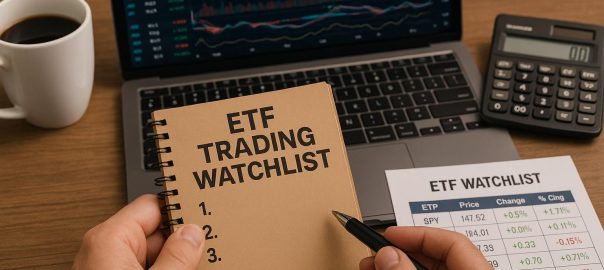
The process of formulating an ETF trading watchlist begins with introspection about your investment objectives and corresponding strategies. Identifying these goals helps in creating a watchlist that reflects your financial aspirations. The following categories are foundational when considering ETFs:
1. Equity ETFs: These are specifically designed to provide exposure to stock markets. By investing in a collection of stocks, equity ETFs often aim to track the performance of specific indices, such as the S&P 500. Tracking such benchmarks allows investors to gauge their performance against widely acknowledged standards.
2. Bond ETFs: These ETFs offer a basket of fixed-income products including government, municipal, or corporate bonds. They are particularly useful for investors with an income-focused perspective or those looking to stabilize their portfolio amidst stock market volatility.
3. Commodity ETFs: These provide direct exposure to physical commodities, offering access to markets that might be less approachable for individual investors. Whether it’s precious metals like gold, energy products such as oil, or agricultural commodities, these ETFs can offer portfolio diversification.
4. Sector and Industry ETFs: Focused on particular economic sectors, these ETFs can target segments such as technology, healthcare, or utilities. Being strategic in sector selection can align with prevailing market conditions or capitalize on burgeoning market innovations.
Research and Analysis
To craft an effective ETF watchlist, engaging in comprehensive research and analysis is indispensable. Key factors that merit attention include:
Expense Ratio: A vital metric, the expense ratio reflects the annual management fees as a percentage of the fund’s total assets. Lower ratios can bolster long-term gains, making this a crucial consideration during ETF selection.
Liquidity: Assessing the trading volume of an ETF is critical. Higher liquidity is indicative of better volume and tighter bid-ask spreads, which, in turn, can minimize transaction costs for investors.
Historical Performance: While past returns do not guarantee future performance, examining historical data can provide valuable insights into an ETF’s resilience and adaptability to varied market conditions and economic environments.
Underlying Index Composition: Understanding the index that an ETF seeks to mirror gives investors insights into potential market risks and opportunities, allowing for more strategic investment decisions.
Utilizing Financial Tools and Platforms
Maintaining an organized and current ETF trading watchlist necessitates using advanced financial tools and resources. These platforms assist in detailed analysis and comparison:
Morningstar’s ETF Screener: This tool provides in-depth analysis, enabling users to compare ETFs across multiple criteria, making it a valuable resource for data-driven decisions.
Bloomberg ETF Screener: Known for its expansive data and insights into the ETF markets, Bloomberg’s tool helps investors remain informed and adjust their watchlist as necessary, reflecting real-time market developments.
Regularly Review and Update
An ETF trading watchlist is a dynamic tool that requires regular updates. Consistent evaluations should be informed by shifts in market trends, evolving economic landscapes, and personal financial goals. Staying alert to macroeconomic indicators, regulatory changes, and sector-specific evolutions that can influence ETF performance is vital for maintaining a relevant and effective watchlist.
Conclusion
The development of a successful ETF trading watchlist is a multifaceted endeavor that requires deep insights into various types of ETFs, meticulous research, and leveraging advanced analytical tools. By staying informed and proactive, investors can adeptly navigate changing market dynamics and refine their investment strategies to optimize portfolio performance.
Inverse ETFs, or Exchange-Traded Funds, are specialized financial instruments designed to capitalize on the decline of an underlying benchmark. They utilize financial derivatives like swaps or futures contracts to effectively undertake a short position against the market. In essence, when the market index decreases in value, the value of the inverse ETF typically increases. Due to this characteristic, inverse ETFs are particularly popular during market downturns or for hedging against expected declines.
The Mechanics of Inverse ETFs
To effectively utilize inverse ETFs, it is essential to grasp their operational mechanics. Generally, inverse ETFs are constructed to deliver performance results that are the opposite of the daily movement of their target index. For example, if a target index falls by 1% on a given day, an inverse ETF aligned to that index would be expected to rise by approximately 1%. It is critical to understand that these instruments are designed to mimic inverse daily returns, meaning their performance could deviate significantly from expected longer-term outcomes due to compounding effects.
Choosing the Right Inverse ETF
Selecting an appropriate inverse ETF involves a deliberate examination of several factors.
Target Index: First and foremost, ensure alignment between the inverse ETF and the index you anticipate will decline. Inverse ETFs can target a variety of indices, including broad market indices like the S&P 500, technology-focused indices such as the Nasdaq-100, or even narrower sectors and commodity indices. Your anticipation of which index will decline should guide your choice.
Leverage Levels: Many inverse ETFs employ leverage to intensify return magnitudes, targeting two or three times the inverse of the benchmark index’s daily movement. While leverage can amplify gains, it concurrently heightens the risk profile of the investment. This heightened risk necessitates a higher degree of caution and understanding when opting for leveraged inverse ETFs.
Risks and Considerations
Despite their utility, inverse ETFs come with a set of risks that investors must carefully weigh.
Volatility: Inverse ETFs, particularly those employing leverage, inherently exhibit high volatility. As the benchmark index experiences significant price swings, these price movements are reflected and potentially magnified in the inverse ETF, leading to substantial losses.
Time Sensitivity: The design of inverse ETFs focuses on short-term trading, with daily resets mandated by their structure. Extended holding periods without active management may lead to outcomes that deviate from expectations, especially in volatile market conditions where compounding effects can accumulate unfavorably.
Costs: The operational complexity of inverse ETFs, largely due to their use of derivatives, results in higher expense ratios compared to traditional ETFs. These higher costs, if not carefully considered, can erode returns over time, adding another layer of concern for potential investors.
Trading Strategies for Inverse ETFs
Investors can consider several strategies to successfully trade inverse ETFs, particularly in bearish market environments.
Short-term Hedging: One common strategy involves using inverse ETFs as a method of hedging against anticipated short-term declines in broader market holdings. By doing so, potential losses in portfolio assets can be offset or mitigated, achieving a more balanced financial outcome.
Market Timing: Another strategy involves incorporating inverse ETFs into a market timing approach. If an investor holds a strong conviction regarding an impending market downturn, inverse ETFs can serve as a speculative tool to capitalize on that prediction. However, this requires a keen understanding of market movements and the associated risks.
Conclusion
In sum, inverse ETFs offer investors a distinctive mechanism to profit from or defend against declining markets. Nevertheless, the inherent complexities and risk factors necessitate thorough due diligence. Understanding the intricate structure, potential advantages, and limitations of inverse ETFs is vital for their integration into any strategic investment plan. To gain a more comprehensive understanding and to explore specific investment avenues, consulting a financial advisor or accessing educational resources from financial institutions and trading platforms is advisable. A combination of informed knowledge and prudent decision-making serves as the cornerstone in effectively navigating the intricate landscape of inverse ETFs amid fluctuating market conditions.
Leveraged Exchange-Traded Funds (ETFs) have carved a niche in the investment world as potent financial instruments designed to amplify the returns of a given index. These unique financial products differ substantially from traditional ETFs, primarily through their strategic use of financial derivatives and debt mechanisms. The objective of leveraged ETFs is to deliver a multiple of the daily performance of an underlying index, often two or three times the standard returns. This amplification strategy can generate substantial returns over short periods but also carries significant risk due to the effects of volatility and compounding.
Key Mechanism
Leverage is the foundational element in leveraged ETFs, offering investors a means to achieve daily performance that reflects a multiple of the target index. For instance, a 2x leveraged ETF strives to deliver twice the daily return of the selected index. It is crucial to emphasize that these results are targeted on a daily basis. This can lead to significant divergences over longer holdings due to the compounding effects, which may be beneficial or detrimental, depending on market conditions and holding periods.
Reasons for Discipline in Trading
Inherent in the trading of leveraged ETFs is the necessity for a disciplined approach. Given their volatility and complex structure, misuse has the potential to result in significant financial loss. The following sections delve into strategies to help investors adopt a disciplined trading mindset when dealing with these dynamic financial instruments.
Evaluating Investment Objectives
Before engaging with leveraged ETFs, establishing a clear understanding of one’s investment objectives is imperative. These instruments are primarily engineered for short-term trading rather than long-term investment strategies, due to the impacts of compounding which alter the risk and return profile over time. For a more in-depth understanding of investment guidelines and considerations, one might consider visiting the SEC’s official website, which offers comprehensive resources.
Risk Management Techniques
Risk management stands at the forefront of trading leveraged ETFs responsibly. Introducing tools such as stop-loss orders can significantly aid in curtailing potential downturns. Furthermore, it is crucial for traders to review their positions regularly and make necessary adjustments based on evolving market circumstances.
Volatility Considerations
The inherently amplified nature of leveraged ETFs also means heightened volatility. Market conditions can shift abruptly, leading to rapid changes in the value of a leveraged ETF. Accordingly, traders must keep a vigilant eye on market dynamics and be prepared to act swiftly to mitigate potential risks. Developing a proactive strategy that accounts for such volatility can be a valuable guardrail against unexpected shifts.
Developing a Trading Strategy
A well-defined trading strategy is often a hallmark of a disciplined trader, essential for mitigating risks while maximizing potential returns when trading leveraged ETFs. Below, we outline critical components for an effective trading strategy.
Setting Clear Entry and Exit Points
Establishing precise entry and exit criteria before initiating a trade can significantly reduce the influence of emotional decisions during trading. Such discipline reduces the likelihood of impulsive decisions, helping to hold steady against emotions that might otherwise lead to substantial financial repercussions.
Utilizing Technical Analysis
Technical analysis emerges as a significant tool when evaluating trading opportunities in leveraged ETFs. By scrutinizing past price movements and chart patterns, traders can discern trends and seize informed trading opportunities. It is important for traders to continually update their analysis, adapting to current market dynamics to sustain their strategic edge.
Reviewing and Adjusting Strategies
The financial markets are dynamic, continually evolving entities. As such, traders should constantly review the effectiveness of their trading strategies concerning leveraged ETFs. A strategy that prospers in one market environment may prove ineffective in another. Regular strategy evaluations and adjustments, based on empirical evidence and market analysis, are necessary to maintain a robust trading framework.
Conclusion
Trading leveraged ETFs requires a substantial commitment to discipline due to the multifaceted complexities and risks inherent in these financial instruments. A comprehensive understanding of their mechanics, coupled with well-formed trading strategies and effective risk management techniques, is essential for successful navigation of the leveraged ETF landscape. Although fraught with potential pitfalls, disciplined trading backed by detailed market analysis and fluid strategies heightens the prospects for minimizing risks and maximizing returns in this volatile and intricate sphere of leveraged trading. Such prudence and adaptability can serve as sturdy guides through the turbulence characteristic of leveraged ETF transactions.
In recent years, exchange-traded funds (ETFs) have burgeoned in popularity due to their advantageous exposure to diverse sectors, one of the most notable being the semiconductor industry. These ETFs provide a streamlined avenue for investors looking to capitalize on the growth potential of the semiconductor sector, which plays a pivotal role in today’s technologically-driven world. However, trading semiconductor ETFs during volatile weeks necessitates a nuanced approach, accommodating the unique characteristics of this dynamic market.
The Nature of Volatility in the Semiconductor Sector
The semiconductor sector is commonly subjected to periods of intense volatility. Understanding the sources of this volatility is vital for investors aiming to navigate the sometimes turbulent waters of semiconductor ETFs. Key factors that can spark volatility include supply chain disruptions, shifts in demand, rapid technological advancements, and broader macroeconomic conditions.
Identifying Key Drivers of Volatility
To engage effectively with semiconductor ETFs, investors must first pinpoint the core drivers of volatility in the sector. These drivers often include:
Geopolitical Risks: Global tensions among major semiconductor-producing and consuming nations can heavily influence the sector. For instance, trade disagreements or geopolitical conflicts can impact production, tariffs, and exports, consequently causing market instability.
Supply Chain Issues: The semiconductor industry is intricately linked to a global supply chain, and disruptions—be it shortages of essential raw materials or unexpected manufacturing delays—can lead to pronounced volatility. Interruptions in supply chains can result from natural disasters, political strife, or logistical challenges.
Technological Developments: The semiconductor industry is characterized by rapid technological change. Innovation, whether it’s the development of new semiconductor materials or breakthroughs in fabrication technology, can swiftly alter market dynamics. Such advancements can shift competitive advantages and provoke industry realignments.
Understanding these elements is crucial for traders, as it enables them to make informed decisions in the face of volatility.
Strategies for Trading Semiconductor ETFs During Volatile Weeks
Investors interested in semiconductor ETFs must adopt strategies that mitigate risks while allowing for the realization of potential gains during volatile periods. Here are important strategies to consider:
Conduct Thorough Research
A foundational strategy for navigating volatile markets is conducting thorough research. Investors should immerse themselves in the latest market trends and examine semiconductor industry reports and company earnings statements. Comprehending these details enables investors to assimilate the fundamental drivers of volatility, facilitating informed trading decisions.
Utilize Technical Analysis
Technical analysis is another powerful tool for trading during volatility. By evaluating market prices, trading volumes, and technical indicators—such as moving averages and the Relative Strength Index (RSI)—investors can identify potential entry and exit points for ETF trades. This analytical approach helps traders anticipate market movements and make calculated decisions.
Consider Diversification
Diversification remains a critical strategy for managing risk, particularly within a volatile sector like semiconductors. Investing in an ETF that comprises a wide array of companies within the semiconductor sphere can substantially minimize the risks associated with volatility concentrated in a single stock. This strategy broadens exposure and cushions against unpredictable price swings.
Monitor Market Conditions Closely
Acute attention to market conditions is indispensable during volatile weeks. Investors must remain vigilant, tracking news specifically related to the semiconductor industry and observing broader economic indicators. This vigilance aids in responding proactively to sudden market shifts and optimizing trading positions.
Risk Management Techniques
Effective risk management is imperative for protecting investments during volatile periods. Traders should employ techniques such as setting stop-loss orders, which limit potential losses by automatically selling the ETF when it reaches a predetermined price level. Additionally, adjusting position sizing according to the level of risk tolerance can guard against significant financial setbacks, allowing for more sustainable trading.
Conclusion
Trading semiconductor ETFs amidst volatility involves meticulous planning and a deep understanding of the sector’s intricacies. To navigate the complexities inherent in this dynamic market, investors must appreciate the nature of volatility, identify key drivers, and apply strategic trading practices. By doing so, they can potentially unlock the myriad opportunities presented by semiconductor ETFs, while implementing safeguards to mitigate risks. For those seeking further insights, financial news platforms and specialized investment outlets offer in-depth resources dedicated to the nuances of ETF investing.
Understanding Earnings Season and Its Impact on Tech ETFs
Earnings season signifies a pivotal period for investors when publicly traded companies release their quarterly financial outcomes. This period is particularly crucial for those trading in tech sector ETFs (Exchange-Traded Funds), as these funds often see significant price fluctuations. These shifts are primarily attributed to the market’s response to reported earnings results and subsequent future guidance from the technology companies encapsulated within the ETF.
Analyzing Earnings Reports
To effectively navigate ETF trades during this period, a meticulous analysis of the earnings reports from primary technology companies within the ETF is indispensable. Several components warrant close observation:
Revenue and Earnings Per Share (EPS): It’s vital to assess whether companies have matched or exceeded analyst projections. A favorable earnings surprise often triggers a rise in the ETF’s price, positioning investors for potential gains.
Forward Guidance: Reviewing forward-looking statements or guidance updates is crucial. More often than not, the management’s outlook on future performance can wield more influence over the ETF’s price action than past financial achievements.
Volatility and Trading Volume
Earnings season generally ushers in heightened volatility and increased trading volume within the tech sector. Consequently, tech ETFs might experience broader price swings than typically anticipated. For investors, being cognizant of potential heightened volatility is key to adapting trading strategies effectively.
Use Stop-Loss and Limit Orders
Risk management may involve implementing stop-loss orders to curtail possible losses during this volatile phase. Alternatively, employing limit orders allows traders to capitalize on favorable price trends while managing the purchase or sale price of the ETF effectively.
Market Sentiment and Analyst Opinions
Throughout earnings season, market sentiment is significantly swayed by financial analysts and their subsequent stock appraisals. Shifts in analyst outlooks can influence tech ETF prices due to the reflection of newly emerged information or insights into a company’s financial well-being or market standing.
Following Analyst Revisions
Monitoring changes in stock ratings by leading analysts is essential, as these revisions often instigate ripple effects across the market. ETF traders are encouraged to keenly observe these revisions to foresee potential fluctuations in ETF prices.
ETF Diversification and Sector Exposure
Tech ETFs serve as a vehicle for diversification within the technology sector, functioning both as a risk management tool and a method to harness sector-wide growth. Nonetheless, the individual stock performances within the ETF can still trigger notable variations in ETF valuation in response to their earnings disclosures.
Reviewing Sector Exposure
Scrutinizing the specific technology sub-sectors to which the ETF is exposed is imperative. Some ETFs might heavily concentrate on sub-sectors like semiconductors, cloud computing, or cybersecurity, each of which may react uniquely to earnings announcements and prevailing market tendencies.
Strategies for Trading Tech ETFs
The successful trading of tech ETFs amid earnings season demands a strategic blend of both technical analysis and fundamental data evaluation.
Short-term Trading: Traders aiming to seize swift price changes might benefit from diligently tracking pre-market and after-hours trading activities surrounding earnings announcements, as these can offer ripe opportunities.
Long-term Investing: Conversely, for long-term investors, earnings season might present buying opportunities if an ETF’s value diminishes due to short-lived reactions, potentially yielding value over the long run.
In summary, adeptly navigating tech ETFs during earnings season necessitates a profound comprehension of corporate earnings reports, market sentiment, and sector dynamics. By analyzing these components and implementing fitting risk management strategies, investors can make informed decisions harmonious with their investment objectives. For more detailed strategies on ETF trading, consider visiting resources like this SEC guide on ETFs.
Understanding Further Implications
Moreover, earnings season doesn’t just reflect on individual corporate performances but often sheds light on broader industry trends. For instance, widespread technological adoption or advancements might be evident through collective corporate growth within a sector, driving ETFs encompassing that sector upwards.
Impacts on Innovation Trends
Evaluating how different technology companies innovate and adapt can further influence investment perspectives during earnings season. Companies demonstrating strong innovation and adaptability tend to create positive market sentiment, subsequently benefiting ETFs holding these stocks.
Incorporating Macro-Economic Factors
While earnings reports focus on company-specific outcomes, integrating macroeconomic factors into analysis provides a comprehensive view. Factors such as international trade policies, currency fluctuations, and overall economic health can influence corporate performances and, in turn, ETF valuations.
Managing Portfolio Through Earnings Season
Active portfolio management throughout earnings season becomes pivotal. Investors must evaluate existing positions relative to earnings projections and sector exposure, potentially rebalancing their portfolios to align with anticipated market movements.
To conclude, the multifaceted nature of earnings season requires investors to engage with a comprehensive analytical approach. A blend of understanding corporate performances, industry trends, and larger economic contexts empowers investors and traders in optimizing their engagement with tech ETFs effectively throughout this pivotal period.
Oil Exchange-Traded Funds (ETFs) are financial instruments that provide investors with an opportunity to gain exposure to the price movements of crude oil, without the necessity of purchasing and physically storing oil barrels themselves. These funds are particularly advantageous for individuals who are interested in investing in oil futures or businesses engaged in the production of oil and related sectors. Understanding the structure and purpose of oil ETFs is vital to avoid succumbing to short-term market fluctuations. An informed approach requires a comprehensive analysis of their underlying components, market trends, and effective trading strategies.
Key Components of Oil ETFs
The initial step in trading oil ETFs effectively is a thorough comprehension of their fundamental components.
Futures Contracts: A core characteristic of many oil ETFs is their association with oil futures. These are standardized agreements to buy or sell oil at a pre-specified price on a predetermined future date. These instruments allow investors to speculate on future oil prices without holding the physical commodity.
Stock Holdings: Additionally, some oil ETFs also include stocks of companies that are deeply involved in various segments of the oil industry. These companies could be engaged in the extraction, production, and distribution of oil and petroleum products. Such diversification within the ETF structure can offer investors broader exposure to the sector beyond mere oil price fluctuations.
Analyze Market Trends
An effective approach to trading oil ETFs involves focusing on long-term trends rather than reacting to short-term price swings. The oil market is known for its volatility, influenced by geopolitical events, shifts in supply-demand dynamics, and various macroeconomic factors.
Identify Macro Trends
Understanding the broader economic landscape is crucial. Examining global economic growth indicators, technological developments in the energy sector, and government policy shifts related to oil production and consumption provides a macro view of market trends. For instance, technological advancements can impact the ways in which oil is extracted and consumed, thus influencing market dynamics.
Monitor Supply and Demand
Supply and demand are the cornerstones of oil pricing. Investors need to stay informed about production levels of major oil-producing nations, decisions made by the Organization of the Petroleum Exporting Countries (OPEC), and consumption patterns in the primary oil-consuming countries. These factors collectively contribute to the strategic insights necessary to make informed trading decisions.
Develop a Rational Trading Strategy
Success in trading oil ETFs necessitates the development and implementation of a rational trading strategy. This involves careful planning and the application of risk management techniques to safeguard investments.
Set Clear Objectives
Defining clear investment objectives is of utmost importance. Determining whether your focus is on short-term gains or long-term growth will guide your decision-making processes and help in managing emotional responses to market fluctuations.
Diversify Your Portfolio
To minimize risks, it is advisable to diversify investments across different asset classes. Consider the integration of other types of ETFs or financial instruments into your portfolio to counterbalance the inherent volatility characteristic of oil ETFs.
Utilize Analytical Tools
Analytical tools are invaluable in making informed trading choices. Employing technical analysis tools such as moving averages, Relative Strength Index (RSI), and Bollinger Bands can help identify trends and provide insights into potential entry and exit points, enhancing decision-making.
Stay Informed on Market Developments
Keeping abreast of global events and market news is critical to gaining insights into potential market movements.
Use Reputable Sources
Relying on trusted financial news platforms and research articles from well-established market analysts is essential for accurate information. Ensuring fact verification before making any trading decisions helps maintain informed positions.
Consider Expert Opinions
Even as you form your own analysis, considering expert opinions can provide additional perspectives, potentially refining your market understanding. Resources from financial analysts and investment firms often contain valuable insights into emerging trends and strategies.
Finally, maintaining a composed mindset and adhering to a thoughtfully devised plan enables effective trading of oil ETFs, allowing investors to withstand market volatility without reacting precipitously. Those interested in further refining their knowledge of trading strategies and market analysis may refer to comprehensive resources, such as those available at Investopedia.
Gold Exchange-Traded Funds (ETFs) have gained prominence as a convenient method for investors to engage with gold markets without the complexities of physical ownership. Essentially, a gold ETF is a type of investment fund that is traded on stock exchanges, bearing striking similarities to trading individual stocks. This approach allows for a broader range of investors to gain exposure to gold price movements by purchasing shares of a fund that tracks the value of gold.
Benefits of Trading Gold ETFs
Trading gold ETFs comes with a variety of benefits that cater to both novice and experienced investors.
One of the primary advantages is liquidity. As with most securities traded on exchanges, gold ETFs can be bought and sold with relative ease. This high liquidity ensures that investors can enter or exit positions with minimal market impact, providing greater flexibility and efficiency in managing investment portfolios.
The next significant benefit is cost-effectiveness. When investing in physical gold, there are inherent costs related to storage and security. Gold ETFs remove these expenses as they represent ownership of gold without an actual transaction of physical metals. This makes gold ETFs an attractive choice for those looking to invest in gold without incurring additional costs.
Moreover, gold ETFs offer a level of transparency that can be appealing to investors. Since the prices of these ETFs are closely tied to real-time gold prices, investors can track their investment’s performance with accuracy. This transparency fosters confidence and informed decision-making as investors aren’t left in the dark about the value of their investments.
Choosing the Right Gold ETF
Selecting the appropriate gold ETF is fundamental to achieving a cleaner trading setup and optimizing investment returns.
An important criterion to consider is the expense ratio of the ETF. Expense ratios represent the annual fees that fund managers charge investors, typically expressed as a percentage of the fund’s average assets. Lower expense ratios are more desirable as they directly reduce the cost of the investment, increasing net returns over time.
Another key factor is the ETF’s tracking error. A tracking error measures how closely the ETF follows the performance of the gold price. A lower tracking error indicates that the ETF effectively replicates the movements of gold, which is crucial for investors seeking precise exposure to gold price changes.
Lastly, assess the liquidity of the ETF. ETFs with higher trading volumes generally offer higher liquidity, allowing investors to move in and out of positions efficiently. High liquidity minimizes the risk of significant price fluctuations when placing large orders, thereby helping investors maintain desired price points without incurring excessive slippage.
Investment Strategy
Developing a robust investment strategy is essential for those trading in gold ETFs. Both technical and fundamental analyses are critical aspects of formulating effective strategies.
Technical analysis involves reviewing historical price data to forecast future price movements. Investors often use chart patterns and technical indicators, such as the Moving Average Convergence Divergence (MACD) and the Relative Strength Index (RSI), to identify potential entry and exit points. These tools help decipher market sentiment and identify trends, enabling traders to optimize the timing of their transactions.
On the other hand, fundamental analysis includes an examination of macroeconomic indicators that have potential implications for gold prices. Key considerations include inflation rates, currency strength, and geopolitical events. Each of these factors can exert a significant influence on gold’s valuation, necessitating ongoing monitoring to achieve the best outcomes in trading.
Risk Management
An aspect of paramount importance in trading gold ETFs is effective risk management. Investors should implement strategies to mitigate risks and manage potential downsides effectively.
One such technique is setting stop-loss orders, which automatically sell an asset when it reaches a predetermined price level. This strategy limits potential losses and helps investors to control the extent of their risk exposure.
Another method is diversifying the investment portfolio, which reduces reliance on any single asset class. By allocating only a portion of their portfolio to gold ETFs, investors can lower their exposure to market volatility, thereby safeguarding their overall investment portfolio against unexpected downturns.
It is advisable for investors new to gold ETFs to leverage available educational resources and gain a deeper understanding of the investment landscape. Financial platforms like Investopedia offer comprehensive guides and tutorials that can serve as valuable learning tools for both beginners and seasoned investors. These resources provide insights into various strategies, risk management practices, and analytical methodologies tailored for trading gold ETFs, ultimately contributing to more informed investment decisions.
In summary, gold ETFs offer a seamless way to gain exposure to gold without the intricacies of physical ownership. Understanding their benefits, selecting the right ETFs, implementing thoughtful strategies, and managing risk are all integral to successful trading in this asset class. Investors can enhance their knowledge and effectiveness in this arena by utilizing educational resources and staying informed about market dynamics.